From the proving drawer, in development
Name TBC
Build anything. Shift everything.
A platformer you build yourself, where one tap flips the whole world from daylight to dusk. We’re making it for one very demanding nine-year-old, and for every kid who has run out of things to build.
- In development
- Android tablets first
- No release date
Behind the scenes
Why we’re making it
My son is nine. He has spent the last four years building levels in games like Geometry Dash and Super Mario Maker, and he has got very, very good at it.
What he loves most is a game with almost unlimited possibility: wiring things so one action sets off another, setting levels to music, and handing a tablet to a friend to say “beat this”. Then he started finding the edges. Some games let you build easily but don’t go deep enough. Others go deep, but in ways that are hard to see and harder to fix.
So he asked me to make one. This is that game.
He is also our chief tester. Every week he gets a new build on his own Android tablet. We watch what he does more than we ask what he thinks. If he loves it, we’re on track; if he doesn’t, no plan will save it.
The game
What it is
A 2D platformer where building is the game. You paint levels from blocks on a grid, wire them up with cause and effect, set them to a beat, play them instantly, and share the ones you’ve beaten.
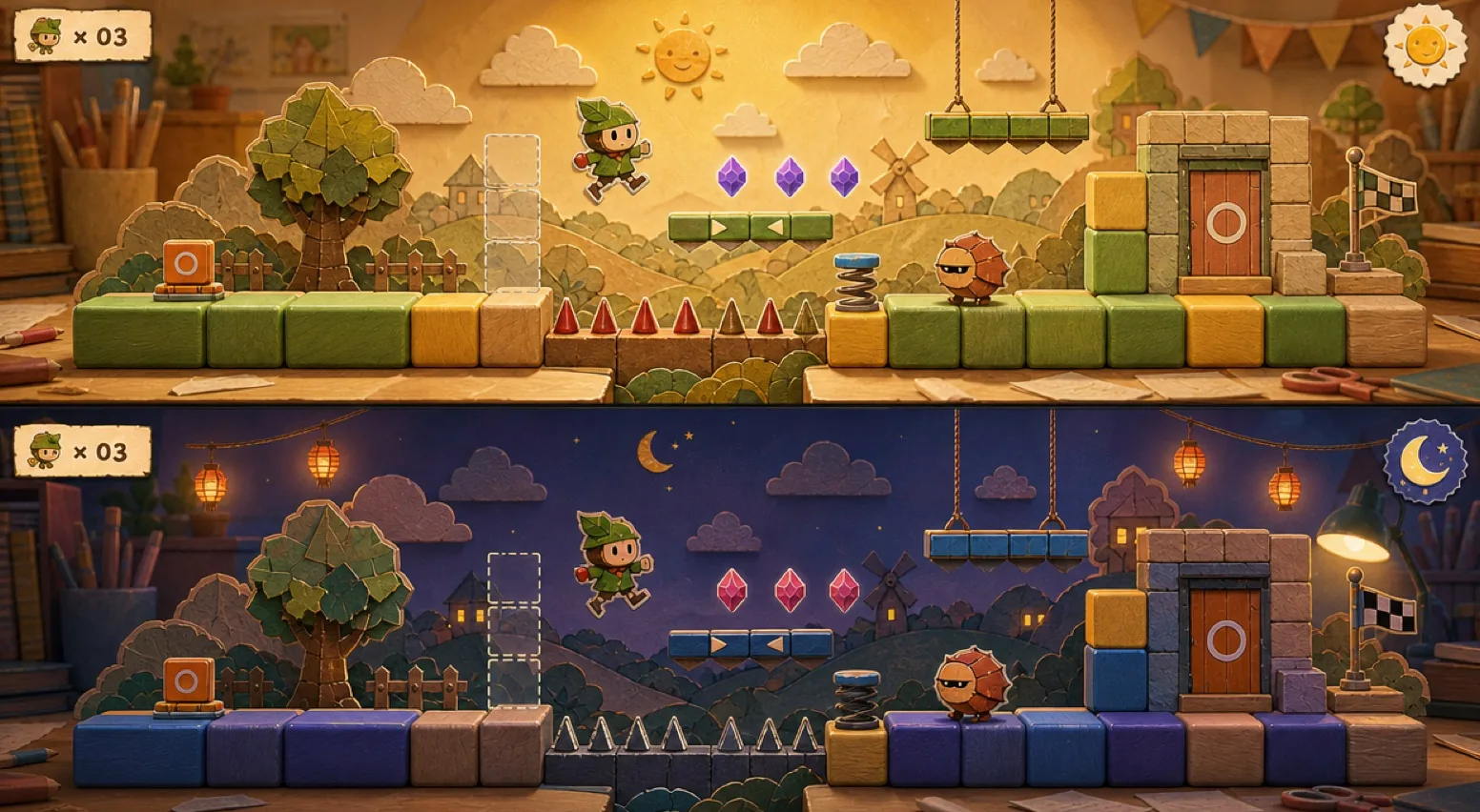
Its signature is Shift: one tap flips the world between day and dusk. Anything can live in day, dusk or both, so a bridge appears, a wall vanishes or a monster freezes as you flip. Every level is really two levels, and you design both.
It’s being built for an 11-inch Android tablet first, with big thumb controls and icons rather than words. The look we’re aiming for, which we call Craft Diorama, is painted wooden toy blocks and layered papercraft, like a world built on a kid’s desk.
And just as important
What it isn’t
Not an online world
No chat, no accounts and no strangers. The app doesn’t touch the internet at all. Levels will be shared in person, by QR code or a parent-approved file.
Not a coding course
There are no scripts to write. Everything is tapped, wired and set up with icons, so a nine-year-old can build things that would take code elsewhere.
Not a copy of the games that inspired it
Our own heroes, our own look, and our own ideas. There are no pipes, for a start; you’ll see why below.
Not a slot machine
No loot boxes, no paid random rewards and no paying to rank higher.
Not a judge
The game never tells you a level is too hard. You prove your level is beatable by beating it, and then you can share it.
Not finished
It’s in the Proving Drawer for a reason. There’s no release date; it’s ready when he says it is.
The big idea
A library of parts, not a mountain of pieces
Most building games grow by adding more and more separate items. This game grows the other way: a smaller library of parts that each change in many ways, and that all work with each other.
Possibility comes from combinations. A thousand items that don’t talk to each other feel smaller than fifty that do. So every new part has to plug into everything already there.
Blocks you can reshape
The same few blocks build very different worlds.
- colour
- size
- material
- pattern
- decal
- a dusk look
Monsters built from parts
A handful of parts makes thousands of creatures, so kids design their own bad guys.
- body
- movement
- senses
- temper
- attack
- defence
- wings
- giant
- comes back
One passage, many forms
One piece for getting around a level, dressed however you like. It has a signature paper fold, where the scene folds away like a pop-up book page.
- portal
- trapdoor
- door
- swamp
- quicksand
- hollow tree
- paper fold
Heroes that change
Pick up a jetpack to reach the high ledge, or tag in the right hero for the right part of a level.
- jetpack
- paper plane
- toy car
- balloon
- double jump
- glide
Cause and effect
Tap a switch, then tap what it changes, and coloured yarn links them. “Do this and that”, “this or that”, and routes that open because of the path you took.
- switches
- plates
- keys
- locks
- clocks
- on the beat
Characters who talk
Speech bubbles and tap-through conversations whose answers can change the level. Lines are built from word tiles, never typed, so shared levels stay safe.
- speech bubble
- caption
- conversation
- branching answers
And everything works with everything
Any part can be wired to a colour, live in day, dusk or both, be tuned in its settings, and be saved to your own library to reuse in any level. A new monster, block or passage doesn’t add one more toy; it multiplies everything you could already make.
Gameplay
Mechanics, built and to come
An honest snapshot of where each idea stands in October 2026.
- Built
- Being built
- Planned
Shift: day and dusk
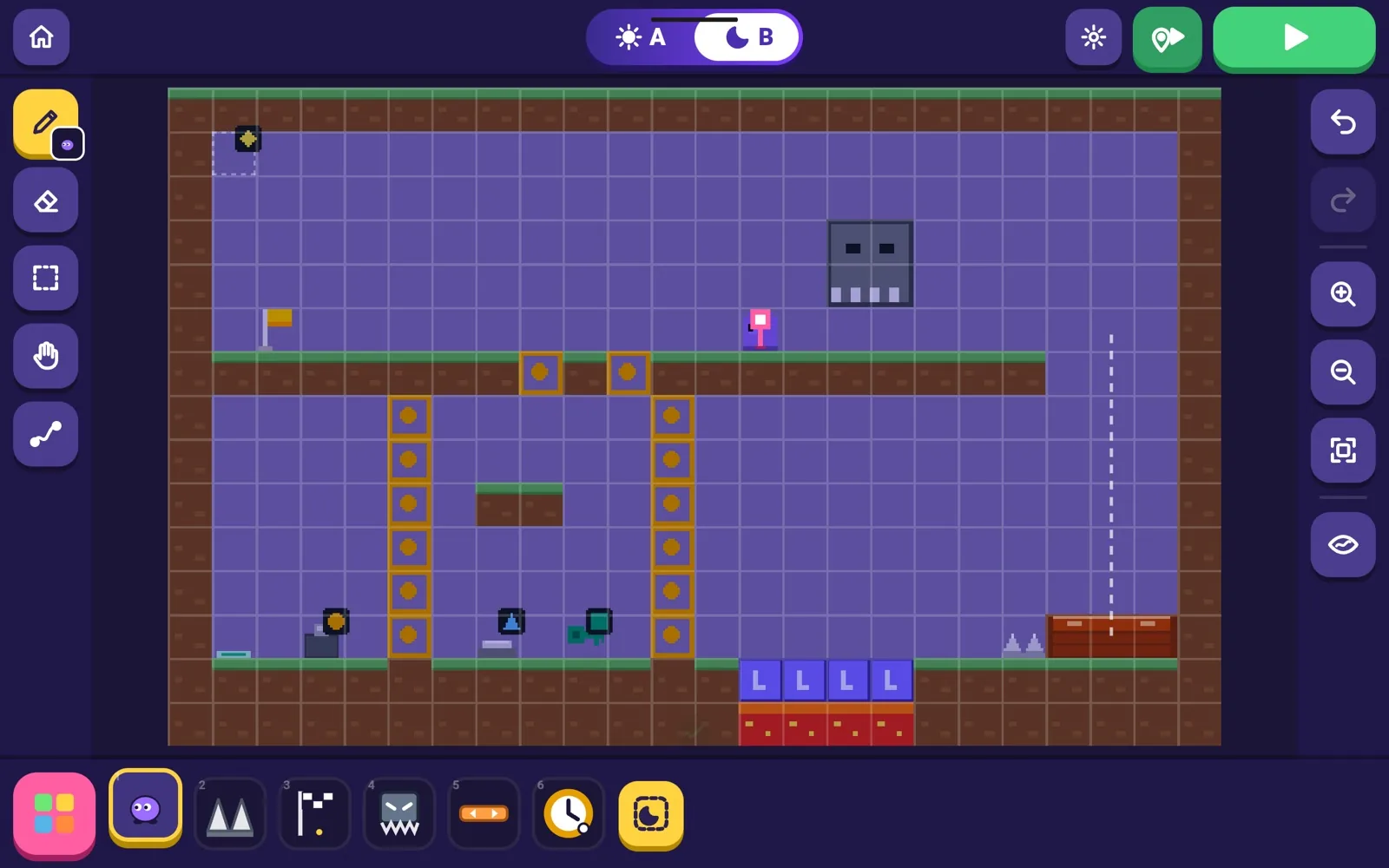
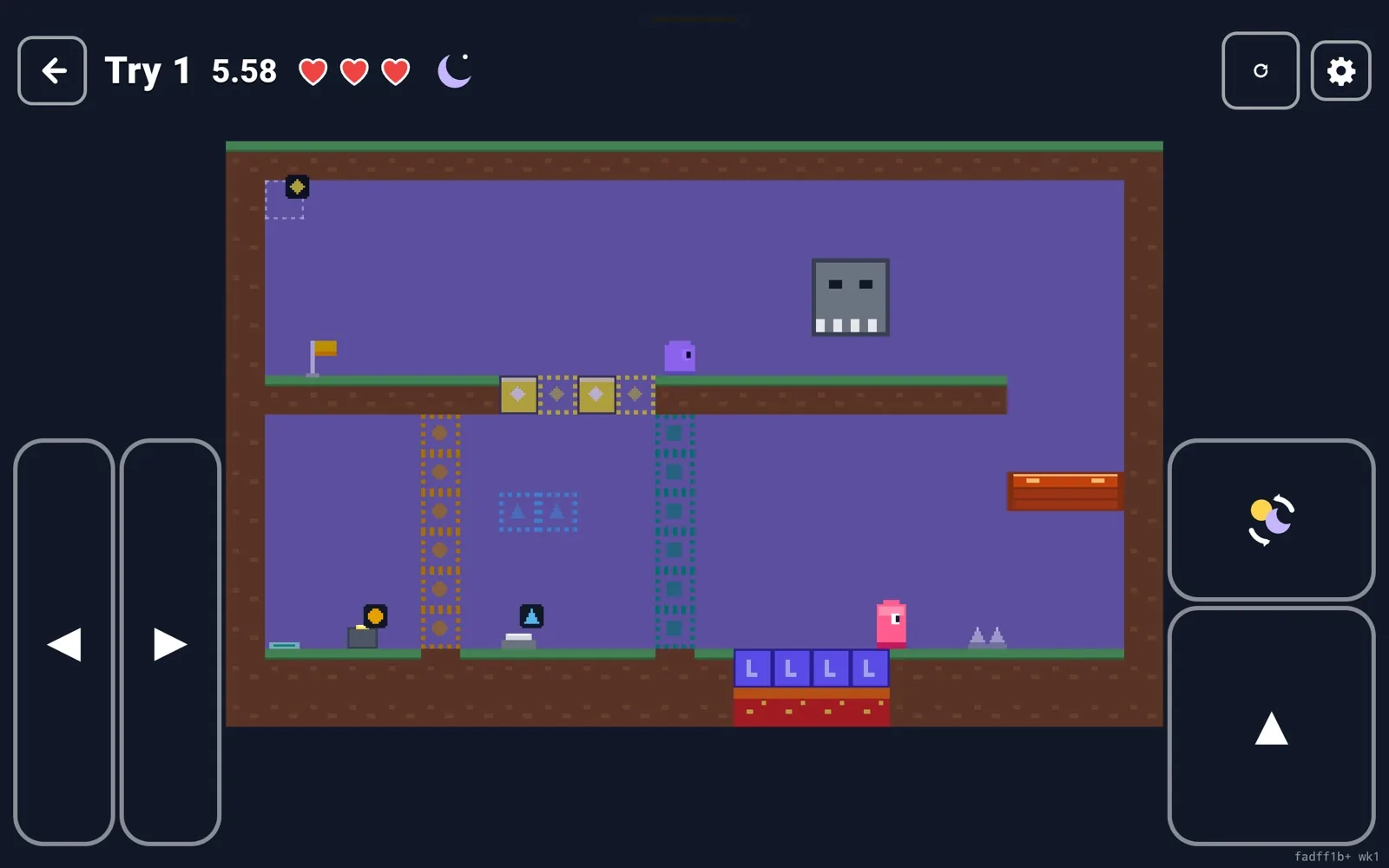
One button flips the world. Anything can belong to day, dusk or both, and the other world shows as dashed ghosts.
Status: Built
Wiring with yarn
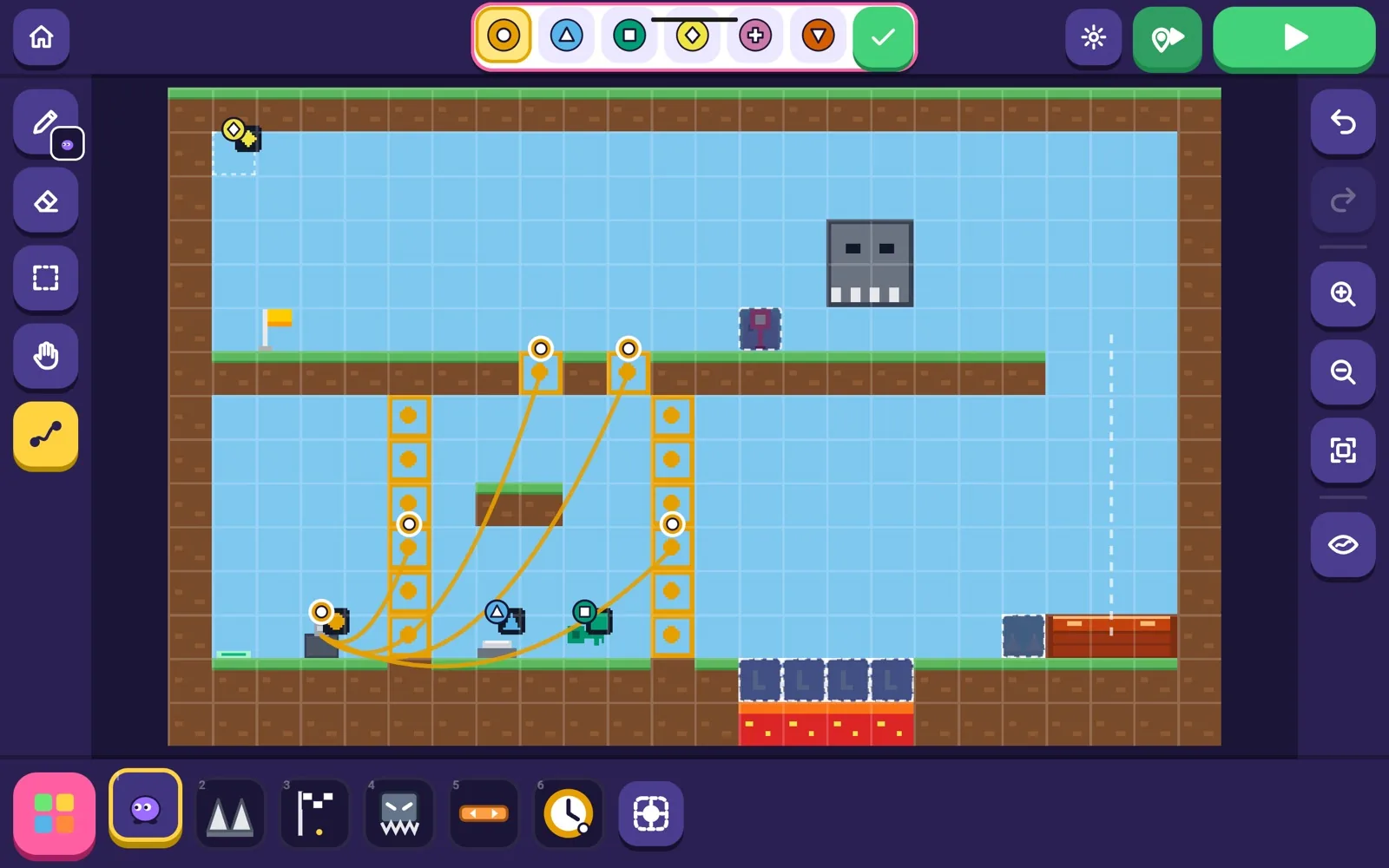
Switches, pressure plates, keys, locks and clocks turn coloured blocks and other things on and off. Each colour also has its own shape, so colour is never the only clue.
Status: Built
Music on the beat
Each level has a tempo and a drum loop, and blocks can switch in time with it. After a fall, the music picks up from your checkpoint.
Status: Built
Hazards and movers
Spikes, lava, saws on tracks, fire bars, crushers you can stand on, springs, crumbling and bouncy blocks, ice, conveyors and moving platforms.
Status: Built
The first monsters
A stompable walker, a spiky one you mustn’t stomp, and a winged hopper, each with wings and giant switches.
Status: Built
Beat it to share it
Every run can be replayed exactly. Beating your own level records the proof that it can be done, and that proof is what will unlock sharing.
Status: Built
Levels without edges
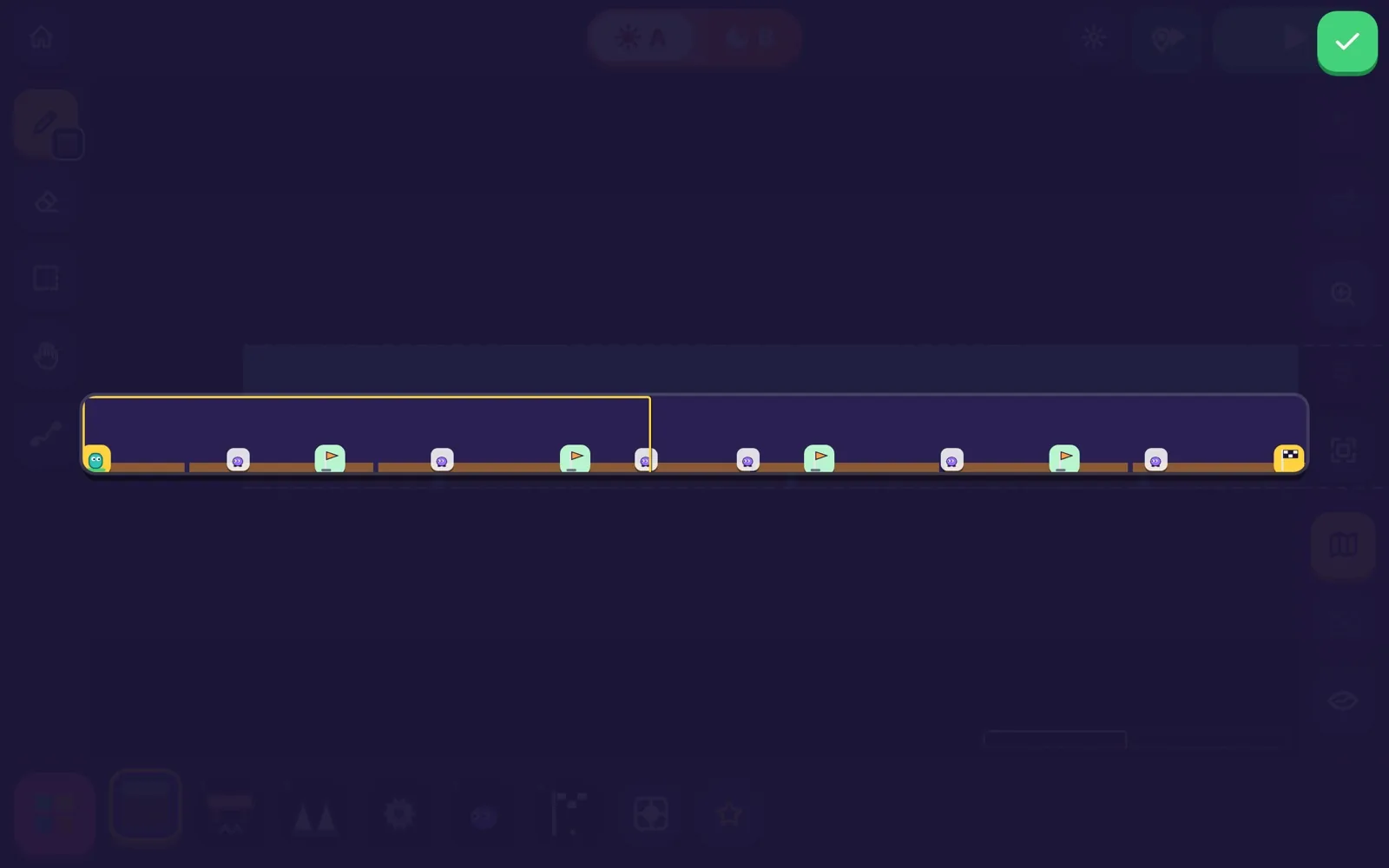
Levels as big as you want, scrolling in every direction, with a map to find your way around while building.
Status: Being built
A world that remembers
Beaten monsters stay beaten and collected treasure stays collected. A fall puts the world back as it was at your last checkpoint.
Status: Being built
Passages and climbing
Configurable ways between parts of a level, plus ladders, vines and ropes to reach higher places.
Status: Planned
Slopes and shapes
Ramps and half blocks alongside the square grid.
Status: Planned
Collectibles and awards
Go from A to B to finish, and find everything hidden for extra awards.
Status: Planned
Abilities from pickups
The jetpack first, then other forms and abilities that change what you can reach.
Status: Planned
Time limits and chases
Beat the clock, keep ahead of a screen that pushes you on, or outrun something that hunts you.
Status: Planned
Monster workshop
Build your own creatures from parts and save them to use anywhere.
Status: Planned
Talking characters
Characters with lines built from word tiles, whose answers can open doors or hand you a jetpack.
Status: Planned
Backgrounds with depth
Layered paper scenery that drifts as you scroll.
Status: Planned
Screenshots
What it looks like today
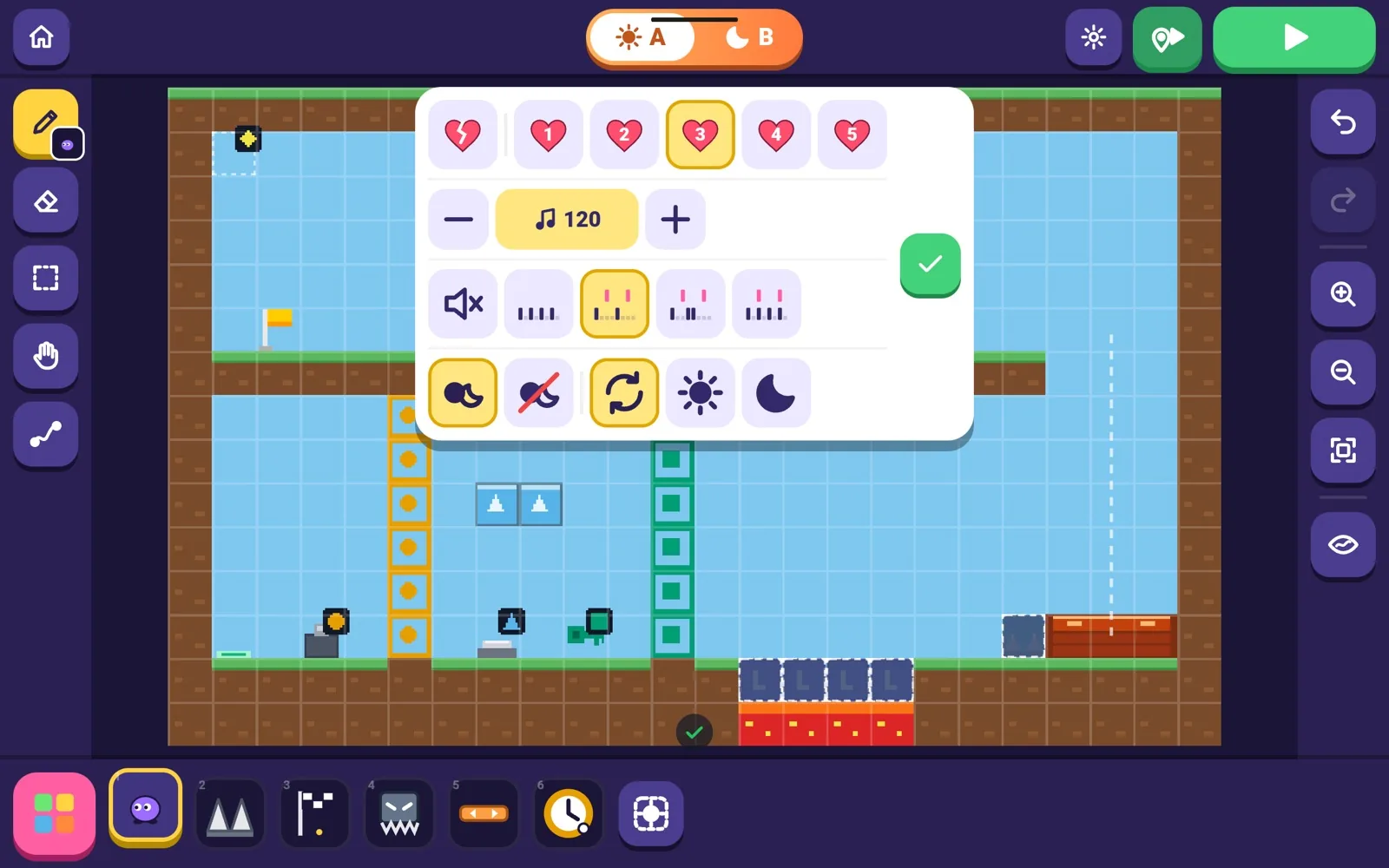
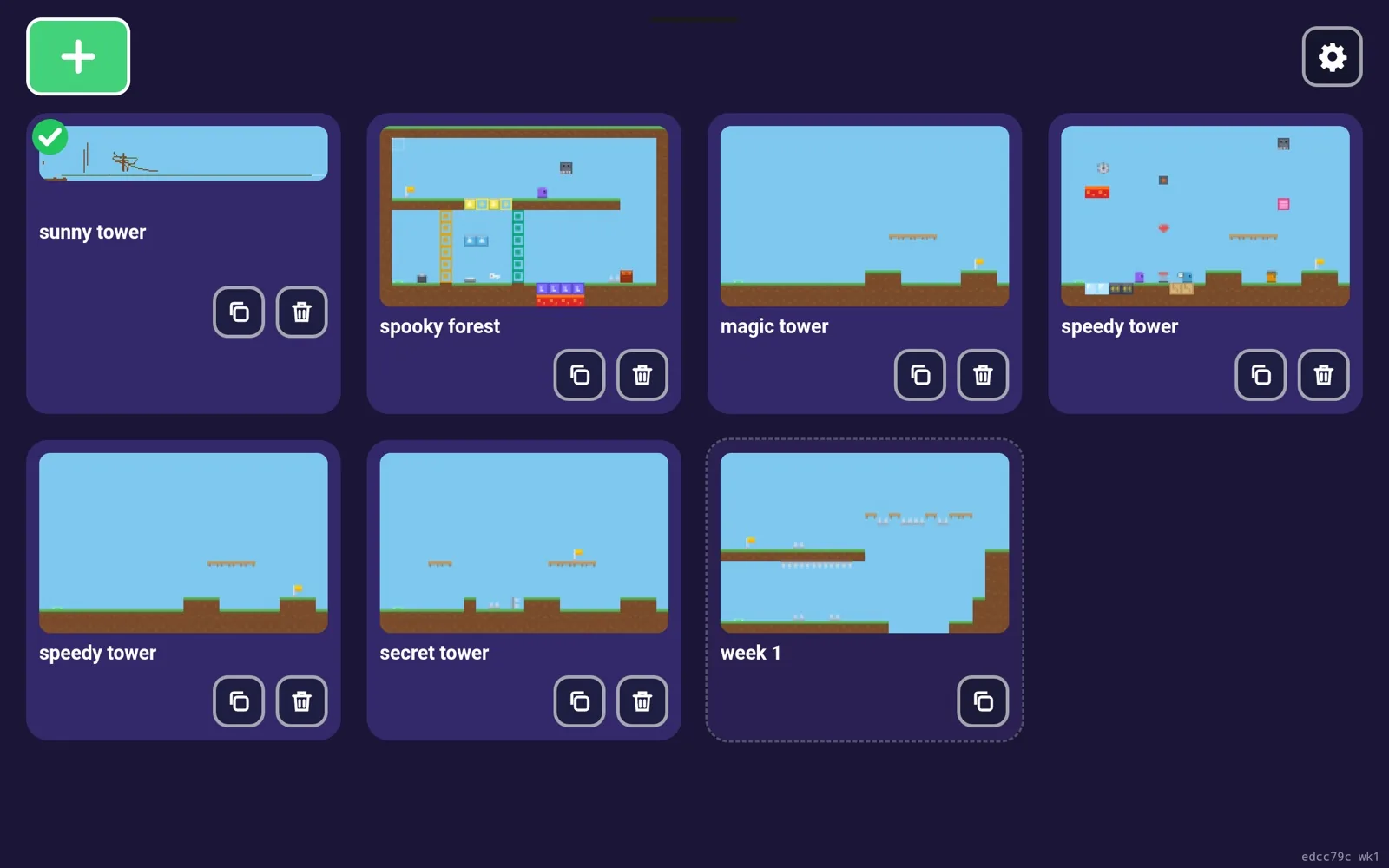
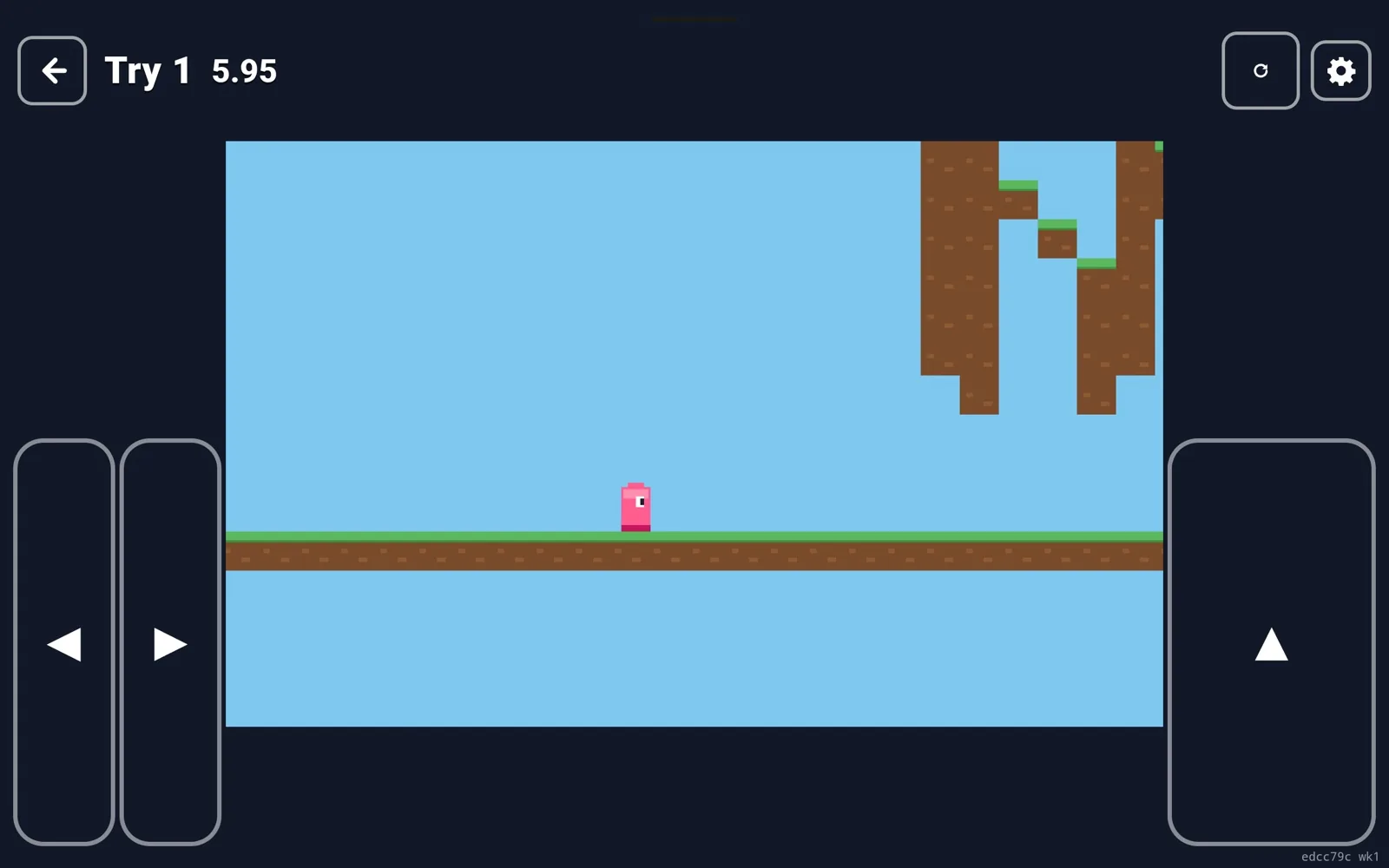
These are real screenshots from the current build. The art is deliberately plain placeholder art while we get the playing and building right; the final look will be Craft Diorama.
Work in progress, placeholder art
Where it’s heading
Concept art
Early pictures to find the feel: wooden toy blocks for everything you build on, and papercraft for the scenery, the creatures and the characters. Warm daylight, and a cosy lamp-lit dusk.
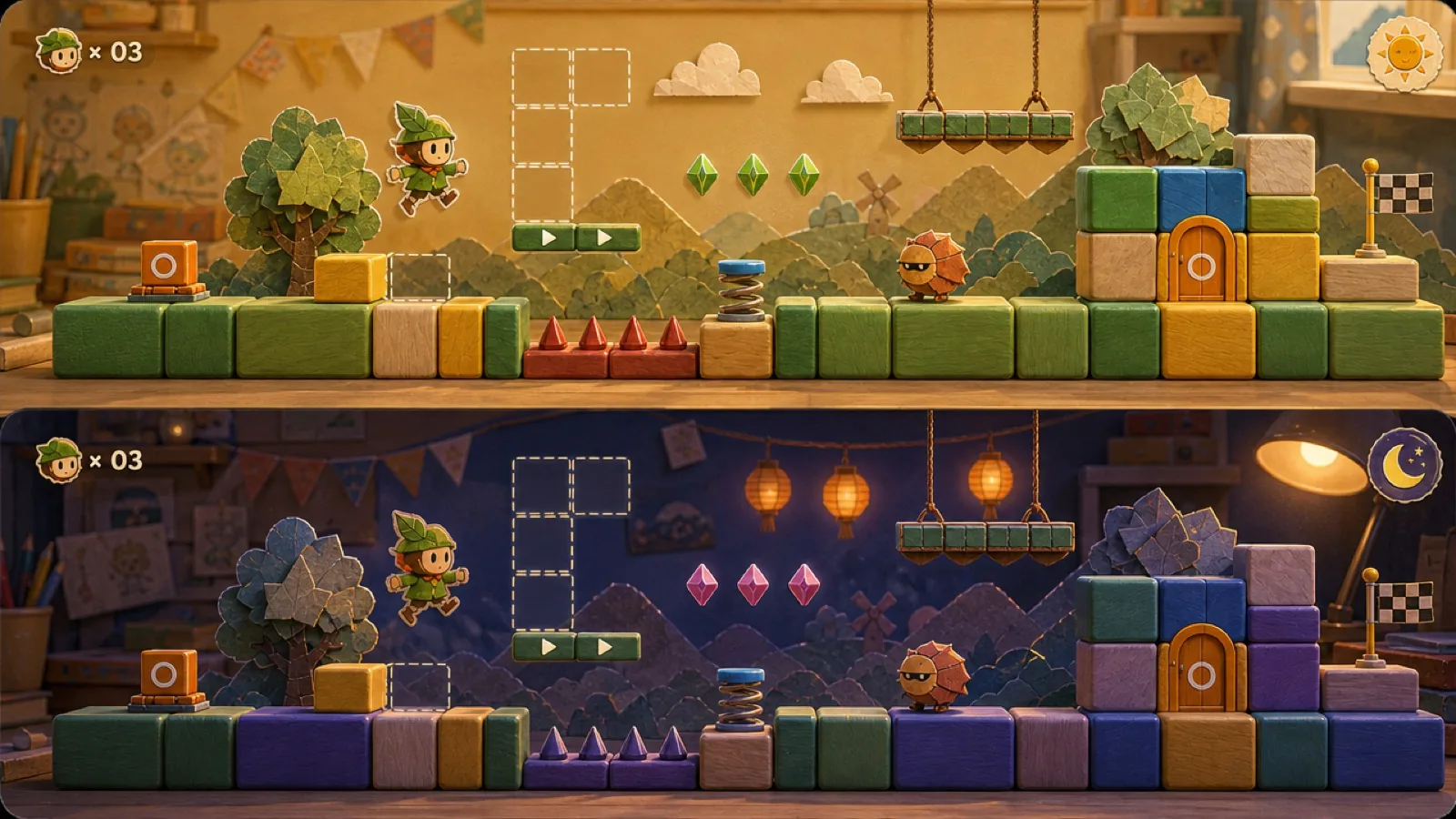
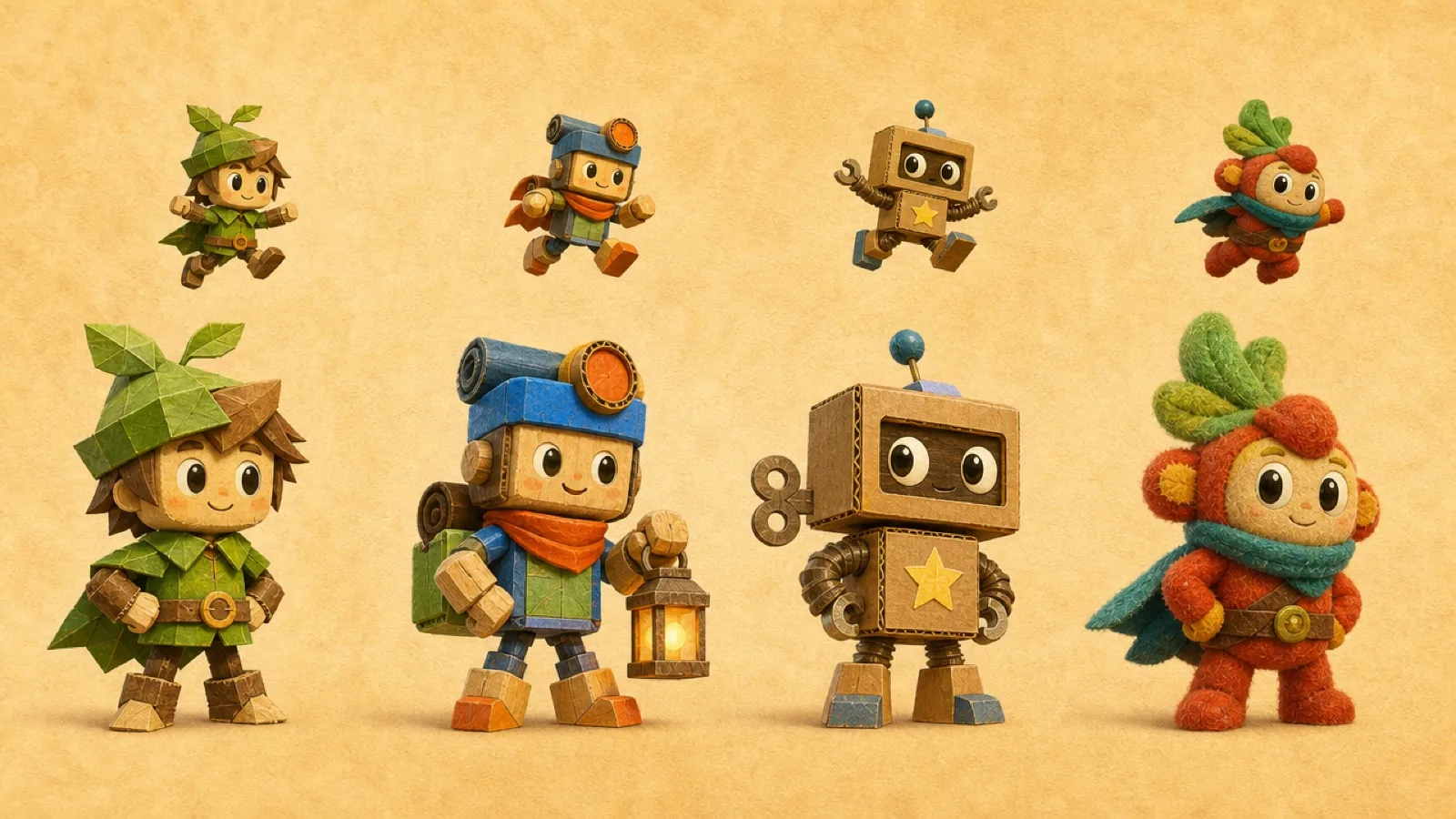
All concept art on this page is AI-generated, for direction only, and the final art may differ. We record where every image comes from.
Behind the scenes
How it’s being made
A few things we care about that you won’t see on the screen.
Tested by the person it’s for
A new build goes on his tablet every week, and each phase ends with a simple test: can he build something, beat it, and want to make another?
Exact to the frame
The game runs the same way every time on every device, so a beaten level replays perfectly. That’s what makes “beat it to share it” trustworthy.
Your work is never lost
Every update has to open everything made with the last one: saved levels, shared codes, all of it. Automated tests check this on every change.
Built for small thumbs
Big touch targets, sized for an 11-inch tablet. Every drag has a tap alternative, and nothing relies on colour alone.
Safe from the ground up
Offline, no accounts, no chat, and no typed words in shared levels. These are rules the code is tested against, not settings.
Big levels, small tablets
Only the part of a level near the hero is active at once, so a level forty screens wide takes about the same work per frame as a small one.
The road ahead
Where it’s at
No dates, just the order. Each phase ends when our chief tester can do the thing it promises.
Phase 1, Done
One fun room
Build a room and beat it in ten minutes, and want to make another.
Phase 2, Now
A world without edges
Huge scrolling levels, passages, climbing, slopes, collectibles, the jetpack.
Phase 3
Make it yours
Monster workshop, talking characters, your own library, backgrounds with depth, chases.
Phase 4
Make a game
Join levels into whole games, with a hub, a campaign, and heroes to swap between.
Phase 5
Ship it
Sharing by QR code and file, polish, and families testing it on Android.
A Burnt & Toast Studios project, still rising in the Proving Drawer.
Screenshots are from the current development build. Concept art is AI-generated and for direction only. Geometry Dash and Super Mario Maker are named only as games that inspired our chief tester; they belong to their owners.